

Digital Quality in 2024: Trends, Traps and Transformation
Today, Applause released the third annual State of Digital Quality reports: one global, one focused on Europe. We’ve pored over data from our testing platform, surveys, and insights from interviews with our customers and internal experts. The result: a snapshot of current digital quality practices, frameworks outlining different levels of progression along the path to excellence, and recommendations on how to improve digital quality.
Although functional testing is typically the primary focus for most teams, we see many of our customers increasing their investment in non-functional testing to become more inclusive and deliver seamless experiences. To help guide those investment strategies, we’re pleased to introduce two new frameworks this year, focused on growing testing capabilities for UX and generative AI (Gen AI). While it’s essential to have a strong functional testing program as a foundation for digital quality, organizations can’t afford to overlook other potential sources of friction for customers.
"Ideally, digital quality focuses less on finding defects and more on creating systems and processes at all stages of development that prevent them from occurring in the first place."
State of Digital Quality 2024
To demonstrate how to best use the frameworks to level up your organization’s testing efficiency and effectiveness in a logical manner, we’ll be rolling out a series of webinars. In each webinar, several Applause experts will outline the frameworks and the typical resources, activities and processes that characterize each stage. Next, they’ll walk through examples of how different organizations have leveled up, sharing the methods that helped them succeed. Each webinar will also outline how to build a business case for investment in testing, along with key metrics that matter for different stakeholders.
Webinar
Getting To Functional Testing Excellence: A Proven Path
Walk through testing frameworks that outline the key practices and capabilities needed to assess and improve digital quality, and identify areas where your organization can increase efficiency and effectiveness.
The first webinar will focus on functional testing, as many of the practices serve as the basis for scaling other types of testing. This year’s State of Digital Quality report found that 10.4% of more than 3,900 survey respondents indicated that their organizations are still in the earliest stages of establishing a digital quality program. Another 61.7% are still working towards comprehensive end-to-end testing processes and documentation used consistently across the organization for all products.
Though testing and collecting feedback throughout the full SDLC is a best practice, less than 2% of respondents indicated that their organizations do so, with 41.7% stating all testing and feedback occurs solely during the testing phase. In addition, 30.6% of respondents reported that only the QA team is involved in testing.
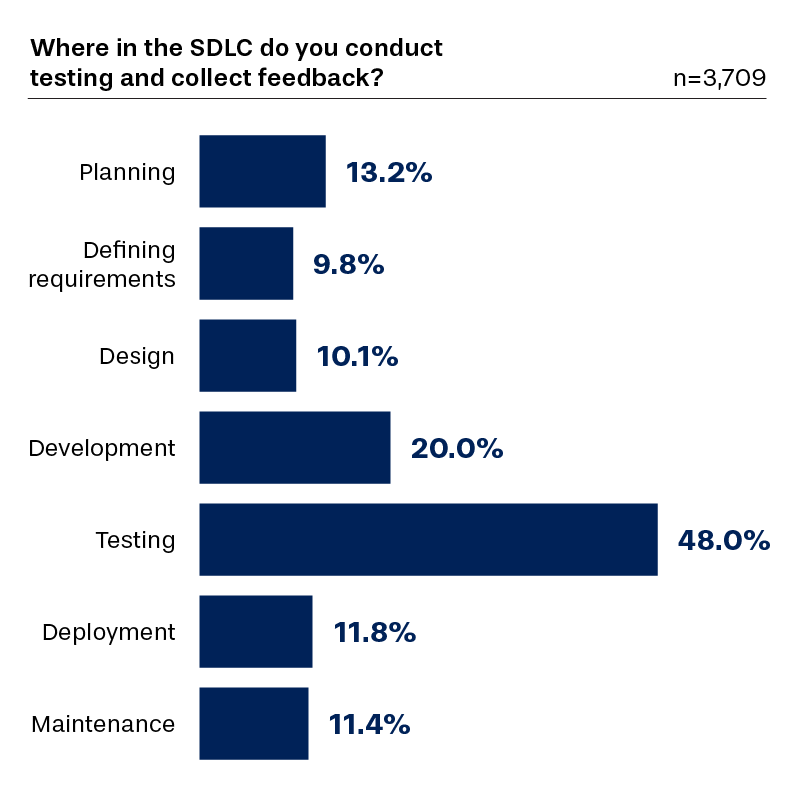
As organizations look to release more inclusive products and improve UX across multiple dimensions – including in Gen AI – implementing mechanisms for continuous testing and feedback becomes critical. We’ll explore success stories throughout our webinar series, with dedicated sessions on AI, payments and localization, UX, accessibility and inclusive design.
“Development organizations need to ‘shift left to get it right’ and can leverage digital quality frameworks for areas like accessibility, AI, payments and UX to set attainable goals for achieving excellence.”
Luke Damian, Chief Growth Officer at Applause
In the coming months, we’ll also be sharing additional posts focused on industry-specific trends and observations for:
- retail
- media and entertainment
- travel and hospitality
- health and wellness
- banking and financial services
- B2B software
State of Digital Quality 2024
State of Digital Quality 2024
Explore the latest State of Digital Quality reports, webinars and industry-focused blog posts.

 4 min
4 min