
AI DATA COLLECTION
The Training Data Your AI Models Actually Need
Broad, diverse, relevant and current data, built around your model's specific requirements.
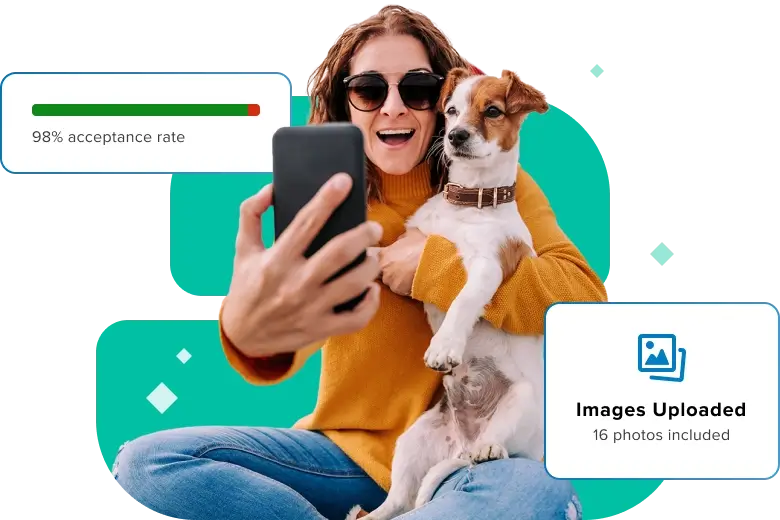

Applause Sources the Right Testing Data at Scale
When AI models underperform, the root cause is almost always data. Not enough of it, not representative enough, or simply not built for the use case the model is actually serving. Publicly available datasets and synthetic data rarely reflect the range of real-world voices, contexts and edge cases. And AI developers that keep data sourcing, training and testing in-house risk internal bias.
Applause is different because we source data based on your specific requirements, whether you’re training an LLM, chatbot or AI assistant. With our LLM training data collection services, we find participants that align with your demographic, language, domain, data type and credential parameters, plus anything else your model needs. Resulting datasets can include text, audio, image, video, communications and more across 150+ languages and 200+ countries and territories. Applause alleviates pressure on teams that are striving for quality but lack access to data at this scale.
High-Quality Data for Training a Range of AI Models
Our services are fully managed and support Gen AI, voice and NLP, computer vision, agentic AI and reinforcement learning from human feedback (RLHF) across major data types.







The Right People, Built Into Every Program
For programs requiring specialists, we find participants with verified credentials, from clinicians for medical AI to attorneys for legal AI to financial professionals for fintech and beyond. Each participant is trained on your requirements doc, and managed throughout the engagement by a dedicated program lead. We handle screening, onboarding, NDAs and personal data consents.

Unparalleled Multimodal Data Sourcing Coverage
Applause sources high-quality data from the world’s largest independent testing community.

1.5M+ participants on demand
Our independent digital experts and real end users across 200+ countries and territories are available 24/7/365.

150+ languages covered
Native speakers match your required locales, across dialects, accents and regional variations.

Every major data modality
Text, image, audio, video, communications and content are structured, labeled and delivered in the format your pipeline requires.

Domain specialists included
Legal, medical, financial and other industry experts available when general-purpose contributors won't meet the bar.

Fully managed programs
Recruitment, onboarding, briefing, quality control and delivery — we handle the full program so your team stays focused on the model.

>98% data acceptance rate
Quality review is built into every program before delivery. An initial validation batch confirms quality before full-scale collection begins.
Data Collection That Aligns With Your Roadmap
No matter what type of AI experience you’re launching, Applause can help.
Generative AI and LLMs
Teaching a large language model to follow instructions well requires the kind of prompt-and-response data you can only get from real people, across languages, tones, and domains. We generate custom instruction-tuning datasets, preference rankings and RLHF collections matched to your use case, giving your model the grounding it needs to perform consistently in production.
Voice and NLP
Voice AI that works in the real world has to handle the way people actually speak, not how they read from a prompt sheet in a quiet room. We recruit real speakers matching your demographic and locale requirements, collect utterances at scale across accents and dialects, and deliver labeled audio datasets built for voice assistants, NLU systems, IVR platforms and speech recognition engines.
Computer vision
A model that can only recognize what it has already seen isn't ready for production. We collect, annotate and deliver labeled visual data for object detection, facial recognition, medical imaging, surveillance and autonomous systems, with the demographic diversity and environmental variation your model needs to handle real-world conditions.
RLHF and model fine-tuning
Getting human feedback into your training loop means finding raters who understand not just what a good answer looks like, but why it's better than the alternatives. RLHF requires exactly that: preference data, quality rankings and comparative evaluations from people with real subject-matter knowledge. We build rubric-trained grading teams matched to your domain at the scale your fine-tuning pipeline depends on.
A Step-by-Step Approach to AI Data Collection
A dedicated program lead manages your engagement from requirements through delivery.
Define your requirements
We start with your model requirements: data type, volume, format, demographic criteria, domain needs and compliance constraints. This becomes the requirements document that drives the entire program.
Build your team
Participants are identified to match your demographic or credential requirements, trained on the doc, and onboarded with appropriate legal agreements. An initial test batch confirms quality before full-scale collection begins.
Collect and review
Data collection runs in parallel with quality review. We triage incoming samples against your specifications, catch issues before they reach your pipeline, and prepare data for annotation in the format you need.
Iterate as your model evolves
Programs adjust as your model learns. If a gap emerges, whether a missing dialect, an underrepresented edge case or a new instruction type, we can pivot within the same engagement without renegotiating from scratch.
High-Volume, Purpose-Built AI Datasets at Scale
Applause data collection services have helped enterprise teams across industries structure, tag and optimize massive datasets to fuel high-performing models, chatbots, voice assistants and more.


Need: Vast voice dataset matched to specific criteria
Solution: Applause sourced 10K+ participants from 17 countries and millions of utterances (e.g., 750K across four Brazilian dialects, 700K French-Canadian Quebecois)
Result: Structured datasets, ready for model training

Need: Labeled datasets across audio, video and computer vision
Solution: Diverse participants from Applause’s global independent testing community
Result: Tagged data from tens of thousands of U.S. and global participants

Need: A voice assistant was struggling with regional accuracy
Solution: Applause collected 100K+ diverse utterances spanning 16 UK dialects and evaluated sensitivity to cultural context
Result: A high-performing voice assistant to serve users in the UK
Not Getting What You Need From Your Training Data?
- Access the world’s largest independent testing community with contributors representing every major data type and language
- Get a custom team with the right demographic mix, domain expertise and credential requirements for your specific use case
- Collect text, audio, image, video, communications and content in the format your pipeline requires
Get started today!
Our team is ready to discuss your testing needs and help you find the right Applause solution.
Frequently Asked Questions
What types of data does Applause collect?
Applause sources training data based on a client's specific model requirements, whether they're building an LLM, chatbot or AI assistant — finding participants who match the needed demographic, language, domain, data type and credential parameters. Data types can include text, audio, image, video, communications and more spanning 150+ languages and 200+ countries and territories.
What makes Applause data collection services more effective than synthetic datasets?
Publicly available and synthetic datasets rarely reflect the full range of real-world voices, contexts and edge cases a model will actually encounter — and keeping data sourcing entirely in-house risks introducing bias. For programs requiring credentialed expertise, Applause can source domain specialists — clinicians for medical AI, attorneys for legal AI, financial professionals for fintech and more. Each participant is trained on the client's requirements doc and supported by a dedicated program lead, with Applause managing screening, onboarding, NDAs and personal data consents.
What kinds of AI models can Applause data collection services support?
Our data collection services can be used to train a range of AI systems, including generative AI/LLMs (instruction-tuning data, preference rankings, RLHF collections), voice and NLP (labeled audio across accents/dialects) and computer vision (annotated visual data for detection, recognition, medical imaging). The data can also be leveraged in RLHF/fine-tuning (rubric-trained grading teams with subject-matter expertise) and other evaluation processes.
What are the major challenges to sourcing your own AI training data?
The three primary obstacles to sourcing data at scale are 1) size, 2) quality and 3) diversity. Enormous amounts of data are required to develop an effective algorithm. Most organizations simply don’t have access to the amount of individuals to contribute enough data for models to train on. In terms of quality, every individual artifact must be verified to ensure your algorithm will work as intended. This process takes up a considerable amount of resources. Finally, without diversity in training data, the algorithm won’t be able to recognize a broad range of possibilities, leading to ineffective, incomplete and/or biased results.