
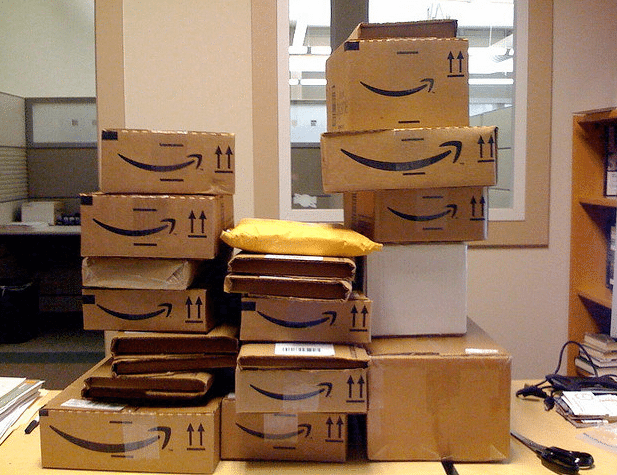
Amazon Dash Buttons Represent The Height Of Seamless Shopping
Amazon is the 800-pound gorilla stalking the retail industry.
Amazon’s formula is easy. At least, on the surface. Go online, search for what you want, click to add to an item to your cart and then confirm your credit card details. Find, click, pay, wait for it to be dropped off at your doorstep.
It is no lie to say that Amazon has fundamentally changed the way we shop.
Amazon was not physically present at the National Retail Federation’s “Big Show” in New York City this week. Amazon had no booth and if its employees stalked the show floor, they were inconspicuous. But everybody in retail is chasing the success of the Amazon model: distributed warehouses and logistics, agile freight spread across every digital channel.
Virtual Dash Buttons Are Perfect For On-Demand Retail
Amazon’s dominance in the retail sector is driven by the following four principles: – Customer obsession rather than competitor focus. – Passion for invention. – Commitment to operational excellence. – Long-term thinking.
The Amazon Dash Button is a great example of these principles. The concept is quite brilliant. Dash buttons fit perfectly into Amazon’s ongoing mission to rule the retail world.
Amazon Dash is a physical “button” that can be placed around the house to order everyday products when you are running low. Toilet paper, washing-up liquid, coffee, Coca-Cola, Doritos … ARC’s editor-in-chief has 40-pound boxes of cat litter delivered to his apartment. Press the button and the product turns up in cardboard box a couple of days later.
These tiny connected devices are among the most useful things that I own.
I have three, but I can safely say that I have not run out of toilet paper in several months. My mother—a very traditional shopper who has never ordered anything online—thinks that these devices take away the human element of going to a store. And she may be right, but that is not the point.
With over 200 brands now available through physical dash buttons, Amazon has decided to take the device to the next level.
An eagle-eyed journo at Recode spotted this week that virtual versions of the dash buttons had appeared on both the Amazon homepage and its mobile app. This was later confirmed to the news source by an unnamed Amazon spokesperson who said that the virtual buttons are free as opposed to the $4.99—credited back to the member after first purchase—that it costs to get a physical version.
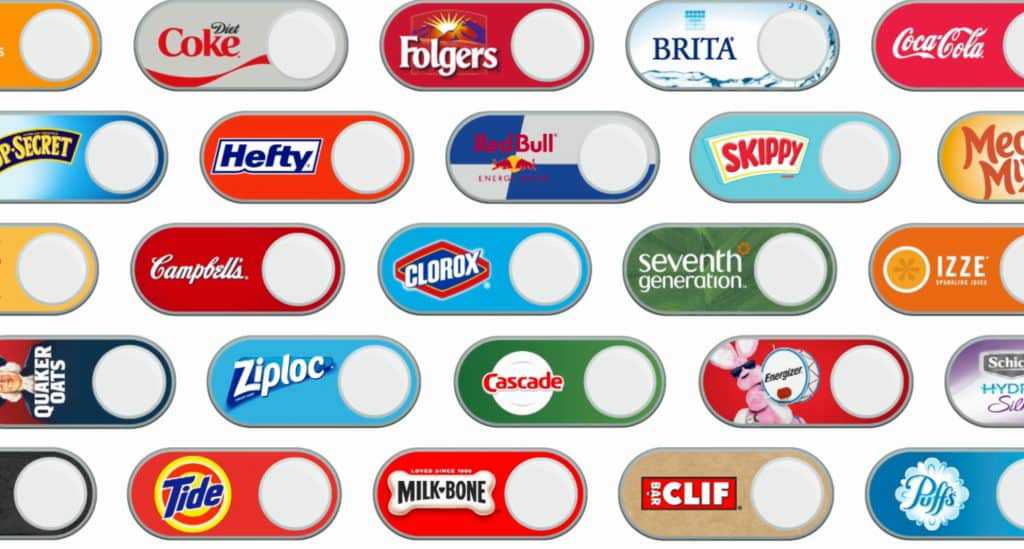
These digital buttons differ from the physical devices in one very crucial way … brands or products that did not sign-up to the original Amazon Prime-based program are now available to shoppers as a virtual dash button. In theory, that means that millions of products are available (almost) instantly. More importantly, it gives the repeat shopper another excuse to stick with the same brand.
The digital version works in exactly the same way as the physical. Find the product that you want to reorder, click the big white button and, hey presto, it gets charged to your account and sent out.
Customers Want A Seamless Experience
To show how it works, Amazon produced this rather cute video that demonstrates just how seamless the experience actually is … which includes a cat, naturally.
There is only one limitation. If the product is not eligible for free Amazon Prime shipping, then it can’t be turned into a dash button.
Amazon’s retail model—technology, machine learning, distribution network and advanced logistics—has removed the actual need to go to a bricks-and-mortar establishment. Dash buttons are but one more venue where Amazon provides an easy and seamless shopping experience that cuts into the margins of legacy retailers.
At the same time, it encourages people to shop on a 24/7 basis in a seamless interaction that keeps the wheels of industry turning. And while it is somewhat ironically testing a physical store that sells everyday items, ecommerce will always be its focus.
Amazon always put the customer first, favoring growth over profits, a model that other retailers have predicted will eventually cause Amazon to crumble. It’s wishful thinking that does not take into account current human behavior and data trends.
Virtual dash buttons are just one more part of the seamless or on-demand shopping experience that Amazon has built. And anything that alleviates the boredom of buying everyday items such as toilet paper is going to get a thumbs-up from this shopper.

 4 min
4 min