
How QSRs Can Serve Up Quality Digital Experiences
Fast food has always relied on operational efficiency, but over the last few years, the industry has seen seismic shifts fed by digital transformation. To succeed in this increasingly digital-first environment, quick service restaurants must scrutinize their websites, apps, kiosks and other digital touchpoints to identify and eliminate any possible friction. Here are four key trends shaping the future of QSR experiences.
1. A rise in mobile ordering and app-led growth
One study by Ipsos found that 65% of QSR visitors have used an order-ahead app. That number jumps to nearly 90% among diners aged 18-24, and one in three respondents consider the ability to order ahead essential when choosing a QSR. Consumers appreciate the speed and convenience of ordering ahead, improved order accuracy – especially for customizations – and access to in-app deals or loyalty rewards.
Customers aren’t the only ones who benefit. On McDonald’s Q4 2025 earnings call, the company reported that its loyalty app, first released in November 2020, had reached nearly 210 million 90-day active users across 70 markets. On a previous earnings call, McDonald’s reported that app users visit 26 times a year versus 10.5 times a year for non-users. In 2025, Starbucks Rewards surpassed 34 million members, accounting for nearly 60% of all U.S. sales.
For QSRs to gain the most value from apps, they need to consistently validate that user flows, payment instruments, and promotions work as expected. Customers want ease and innovation – restaurants must balance new offerings and ways of interacting with intuitive experiences to keep diners coming back.
2. Evolving and increasingly complex customer journeys
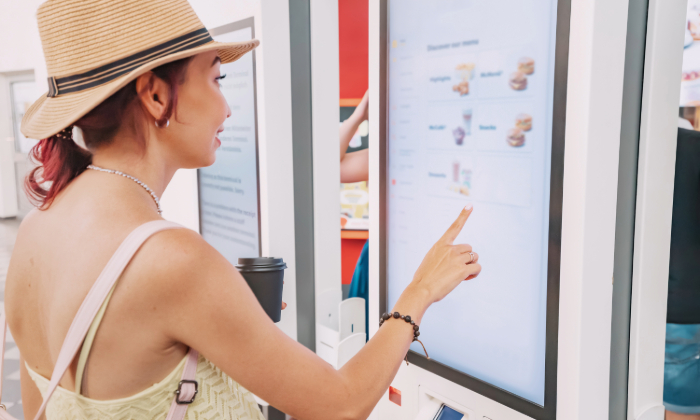
The simple counter or drive-through days are long gone. As ordering through mobile apps, in-store kiosks and partners like Door Dash and Uber Eats continues to grow, customer journeys become more varied and involved. Each touchpoint introduces new potential points of friction or failure. Whether customers pick up online orders at the drive-thru, collect them in-store, or have meals delivered through a third party, QSRs must validate that each handoff occurs seamlessly. In-store kiosks must work intuitively, process payments correctly and allow customers to easily redeem rewards for items or upgrades that increase the loyalty program’s perceived value.
Handoffs between the digital and physical components throughout the customer journey matter more than ever: Operational readiness is paramount to protect profits. Yet few franchises have the capacity to validate end-to-end customer journeys quickly when rolling out updates. Assessing complex customer journeys poses a challenge, but it’s essential for organizations looking to identify and eliminate friction before it can sour a customer’s interaction with the brand.
Applause has helped many quick service restaurants run through new processes – including both online and in-store touchpoints – to understand the impact on the customer journey. One brand rolling out in-store ordering kiosks worked with Applause to validate that the kiosks allowed members of its loyalty program to use promotional offers they’d received in-app at the kiosks. Applause also helped the chain check that orders placed through the app were properly customized to add or remove toppings. Tester feedback gave the organization visibility into where the process needed adjustment prior to a broader launch.
In other engagements, Applause testers have identified issues where kiosks have had accessibility challenges, such as set-up that made it difficult or impossible for a wheelchair user to reach the screen or use a tap payment. Testers also provide feedback on usability: are the kiosks positioned correctly in-store to avoid glare? Do they interfere with users ordering at the counter? These types of insights help QSRs understand and address potential friction.
3. AI-powered analytics to boost loyalty and optimize experiences
AI has made it easier for organizations to extract insights from the vast amounts of data they collect, whether evaluating regional menu preferences or why a particular store has been losing volume. AI is finding its way into a variety of restaurant tasks, including:
- Scheduling workers to align with demand
- Capturing drive-thru orders with voice ordering systems
- Ordering supplies and managing logistics
- Predicting equipment failures and optimizing maintenance schedules
- Checking orders for accuracy
- Responding to customer support inquiries through AI-powered chatbots
- Personalizing offers to drive customer engagement
- Adjusting a location’s offerings on the fly to reduce wait times
In an industry where even a slight increase in average order size or small cost savings per location can have a big impact on the bottom line, AI has tremendous potential. But to make sure it delivers value, AI must be properly vetted to ensure accuracy and relevance. Many internal teams lack the skills to test AI applications on their own. A seasoned crowdtesting partner can deliver the input and evaluations necessary to train, test and tune many different aspects of AI, from providing utterances to train voice recognition to feedback on personalized offers and chatbot interactions.
4. Expansion into new markets
Launching into new territories with different labor laws, food safety requirements and regional preferences is complicated. QSRs like Bonchon, Dave’s Hot Chicken and Cava Grill have an appetite for expansion outside their established markets – all opened stores in new states last year and have released plans promising aggressive growth.
Expanding into new countries with different languages, currencies, and cultural expectations is an even greater challenge – but that’s not stopping franchises hungry for faster growth. With Domino’s focused on expanding its footprint in India, Wendy’s franchise agreement with the Flynn Group in Australia, and Chick-fil-A investing in stores in Europe and Asia, competition for diners is heating up.
On-demand, in-market testers can help restaurants launching in new regions make sure they’re meeting local tastes and expectations. Checking that apps recommend the closest local store can help build a customer base among those already familiar with the brand. Validating that menus reflect correct pricing in the local currency, correctly calculate tax and that local payment instruments are accepted is essential to protect revenue. Applause’s crowdtesters can provide feedback on whether menus, ordering processes and checkout flows need to change to meet the expectations of local diners.
Case Study
Just Eat Case Study
Find the right testing mix for great diner experiences
As quick-service restaurants adopt new technologies and roll out fresh offerings for diners, a comprehensive testing strategy and UX research program will be essential ingredients for success. Applause can help throughout the process with human insight, whether you’re looking for a partner to assess accessibility, streamline regression testing, or validate customer journeys. Contact us to learn more.

 6 min
6 min